
Teeth Grinding and Bruxism: When a Night Guard Helps
Quick answer: Bruxism means repeated teeth grinding or jaw clenching, often during sleep or periods of stress. A custom night guard can protect teeth and dental restorations from further wear, but it does not automatically treat every cause. Jaw pain, tooth damage or sleep concerns should be checked.
Reviewed by Dr. Kant Oektem. Last updated: May 2026.
Key points
- Bruxism can affect teeth, fillings, crowns, jaw muscles and jaw joints.
- A night guard protects tooth structure but does not solve every trigger for grinding.
- Stress, sleep problems, alcohol, caffeine, smoking and some medicines can contribute to bruxism.
- Tooth wear, jaw pain, ear pain or morning headaches should be assessed clinically.
Common signs of teeth grinding
Many people do not notice teeth grinding themselves, especially when it happens during sleep. A partner may hear grinding sounds, or the dentist may see wear during a check-up.
Repeated symptoms matter because strong clenching or grinding can affect enamel, fillings, crowns, jaw muscles and the temporomandibular joints.
- Flattened, worn, sensitive or chipped teeth.
- Jaw muscle tension, facial pain or limited opening.
- Morning headaches, ear pain or pressure around the jaw.
- Clicking, tenderness or discomfort around the jaw joints.
- Reports from a sleep partner that grinding sounds occur at night.
Causes and risk factors
Bruxism rarely has one simple cause. Patient sources link teeth grinding with stress, anxiety, sleep disruption, alcohol, caffeine, smoking, family history and some medicines.
Snoring or possible sleep apnea can also be relevant. If loud snoring, witnessed pauses in breathing or strong daytime sleepiness are present, medical or sleep-related assessment may be needed in addition to dental care.
When a night guard can help
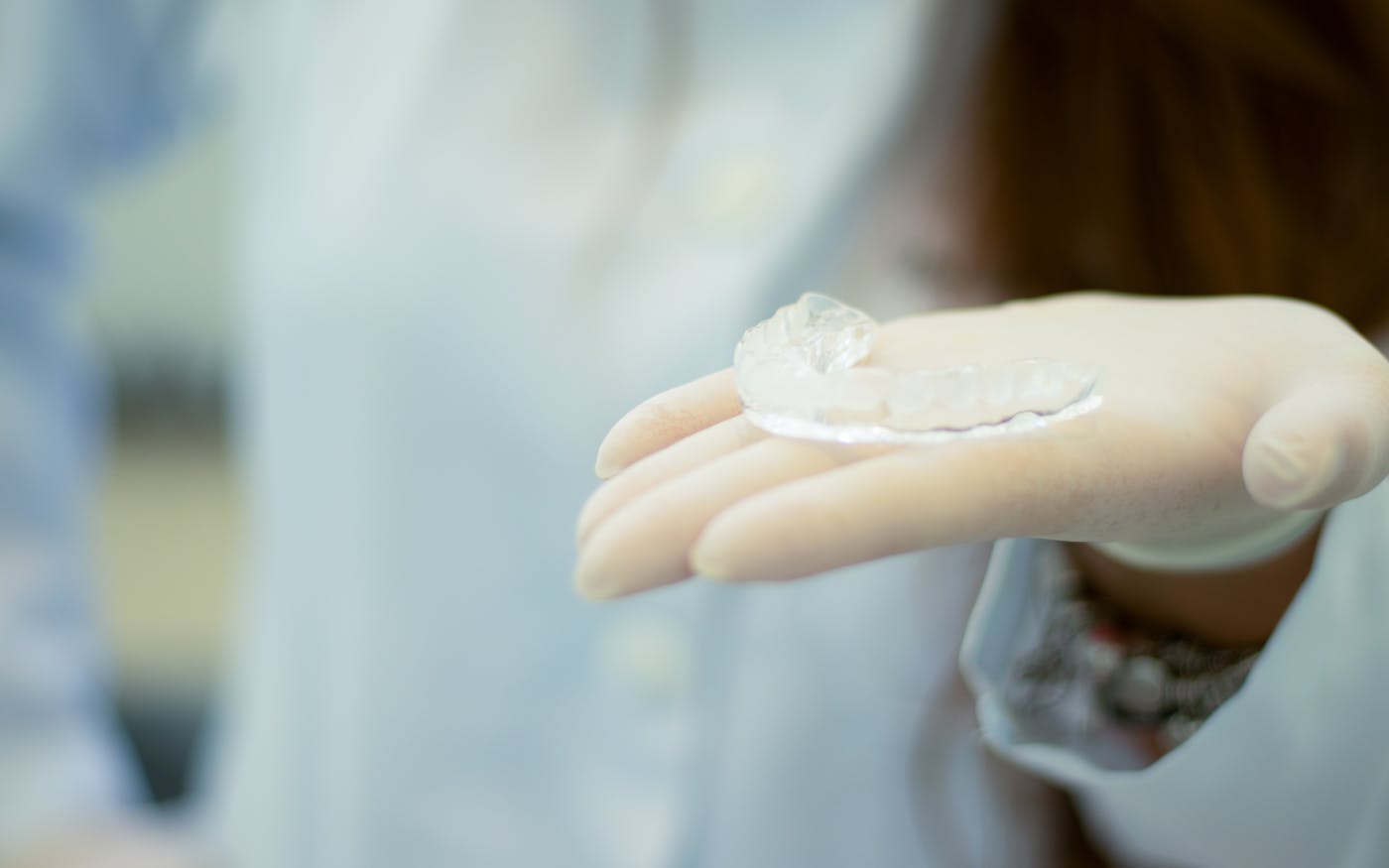
A night guard separates the upper and lower teeth during sleep. A custom dental appliance is fitted to protect teeth and restorations from grinding-related wear.
The limitation is important: a night guard can reduce damage, but it does not automatically remove stress, sleep problems or other triggers. Fit, comfort and follow-up checks are part of safe long-term use.
- Useful when tooth wear, sensitivity or damaged restorations are present.
- Useful when jaw muscles or jaw joints show repeated overload.
- Needs review if pressure spots, bite changes or increasing pain occur.
Self-care that can support treatment
Self-care cannot replace a diagnosis, but it can reduce strain. For awake bruxism, awareness during the day can help patients notice clenching before the muscles become overloaded.
- Keep the jaw relaxed during the day: lips together, teeth apart.
- Use relaxation routines, regular sleep and physical activity when stress is relevant.
- Reduce caffeine, alcohol and nicotine in the evening if symptoms are noticeable.
- Avoid chewing gum or very hard foods when teeth or jaws are painful.
- Start jaw or neck exercises only with professional guidance if symptoms are significant.
When to book a dental or medical check
A dental check is useful when teeth become sensitive, restorations chip, jaw or ear pain appears, or a sleep partner notices grinding. The examination looks at teeth, restorations, muscles, jaw joints and possible contributing factors.
Further medical assessment can be important when sleep problems, strong daytime tiredness, breathing pauses, medication changes or high stress are part of the picture. Online information can prepare patients, but it cannot diagnose bruxism.
FAQ
What is bruxism?
Bruxism is repeated teeth grinding, jaw clenching or jaw muscle activity. It can happen during sleep or while awake and often goes unnoticed until tooth wear, jaw pain, muscle tension or sleep-related reports appear.
What are common signs of teeth grinding?
Common signs include worn or sensitive teeth, chipped fillings, jaw muscle tension, jaw joint pain, morning headaches, ear pain or grinding sounds during sleep. A dental examination can check whether bruxism or another condition is likely.
Does a night guard treat the cause?
A night guard mainly protects teeth and dental restorations from grinding forces. It does not automatically treat stress, sleep disorders, medicine effects or other triggers, so follow-up and cause-related assessment remain important.
What can I do at home?
Relaxation, regular sleep, less evening caffeine or alcohol and daytime jaw awareness can help reduce strain. Home care should not replace a dental check if pain, tooth damage, strong tension or sleep concerns are present.
When should I see a dentist?
Book a dental check if teeth are sensitive or worn, restorations break, jaw, face or ear pain appears, or someone notices nighttime grinding. Sleep apnea signs, breathing pauses or strong daytime tiredness may need medical assessment.
Medical context and sources
These references support patient orientation and do not replace diagnosis, examination or individual treatment planning.
- NHS: Teeth grinding
- NIDCR: Bruxism
- Mayo Clinic: Bruxism symptoms and causes
- zahn.de: Zähneknirschen / Bruxismus