
Dental Tartar in Konstanz: What Helps and What to Avoid
Quick answer: Dental tartar is hardened plaque and cannot be reliably removed with a toothbrush or floss. Until a check, brush twice daily with fluoride toothpaste and clean between the teeth to limit new soft plaque. Hardened deposits should be removed professionally. Bleeding, swelling, persistent bad breath or loose teeth should be assessed by a dentist.
Reviewed by Dr. Kant Oektem. Last updated: July 2026.
Key points
- Plaque is soft, while tartar is a hard mineralised deposit.
- A toothbrush and floss remove soft plaque but not firmly attached tartar.
- Do not scrape tartar at home with metal tools or household remedies.
- A practice distinguishes surface tartar removal, professional cleaning and treatment below the gumline.
- Repeated bleeding, swelling, persistent bad breath or loose teeth need a dental assessment.
Plaque and tartar are not the same
Plaque is a soft, bacteria-containing film that forms again during everyday life. Thorough brushing and cleaning between the teeth can reduce it. If plaque remains, minerals can become incorporated into it. The result is tartar, a hard deposit that adheres to the tooth surface and can make further cleaning more difficult.
Tartar is therefore not only a cosmetic concern. It can sit near the gumline and be associated with redness or bleeding. The visible deposit alone cannot show whether gum disease or a deeper problem is already present, so symptoms and gum measurements still matter.
Trying to remove tartar at home: what to avoid
Do not try to lift tartar with metal hooks, needles, sharp objects, acids or abrasive household mixtures. This can injure the gums and exposed tooth surfaces, while leaving deposits under the gumline or around fillings and crowns unassessed. Those areas should be handled by a dental professional.
A manual or electric toothbrush can remove soft plaque, but not firmly attached tartar. Floss and interdental brushes are designed for daily cleaning, not for levering off hard deposits. Their main role is to reduce how long new plaque remains on the teeth.
What a dental practice checks and removes
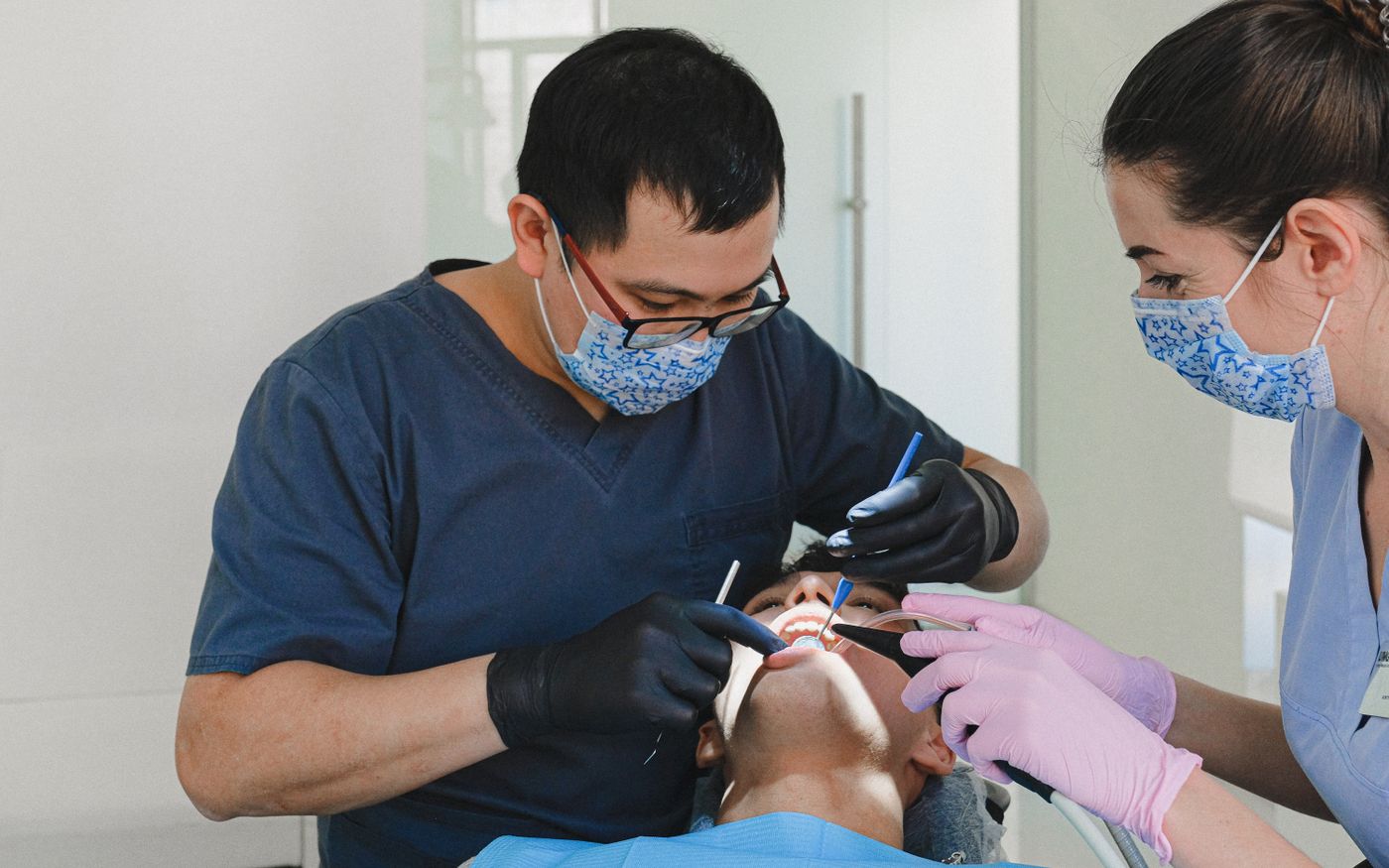
The practice examines the teeth, gumline and reachable deposits. Tartar above the gumline may be removed with suitable hand instruments or sonic or ultrasonic instruments. Surfaces may then be smoothed or polished, depending on the findings, restorations and sensitivity. The approach should be adapted to the individual situation.
Professional dental cleaning usually includes more steps than removing hard deposits alone, such as removing soft plaque and stains, polishing, fluoride treatment and advice for home care. It is not automatically needed at the same interval for everyone. The appropriate rhythm depends on individual cavity and gum-disease risk.
If deep gum pockets or periodontitis are present, targeted cleaning below the gumline may be needed. That is different from removing visible surface tartar and is planned after an examination and periodontal assessment.
How to limit new deposits at home
Brush twice a day with fluoride toothpaste and clean between the teeth daily using the method that fits your mouth. Floss may suit tight spaces; interdental brushes can be more useful in wider spaces or particular gum situations. A dental professional can help choose the size and demonstrate the technique.
Pay attention to areas behind the lower front teeth and around the back molars, where some people develop deposits more quickly. Disclosing tablets can show soft plaque above the gumline, but they do not reliably show tartar and do not replace a dental examination.
When bleeding gums need a dental check
A single small amount of bleeding after starting unfamiliar interdental cleaning is not automatically an emergency. Repeated or marked bleeding, swollen gums, persistent bad breath, pus, receding gums or loose teeth should be assessed. Periodontitis can cause few symptoms at first, so waiting for severe pain is not a safe test.
Severe swelling, fever, severe pain, or difficulty swallowing or breathing are urgent warning signs. Do not wait for a routine tartar appointment in that situation; arrange appropriate dental or emergency medical help.
Related pages from the practice
You may also find our pages about professional dental cleaning, cleaning between teeth, periodontitis, dental check-ups, sensitive teeth and contacting the practice useful.
FAQ
What exactly is dental tartar?
Tartar forms when soft bacterial plaque becomes mineralised and firmly attached to the tooth surface. It can sit above the gumline or, with gum disease, below it. Its visible colour alone cannot show whether the gums or supporting tissues are healthy.
Can I remove dental tartar myself?
Firmly attached tartar should not be scraped away with metal tools, needles, acids or abrasive home mixtures. These can injure gums and exposed tooth surfaces. Brushing, floss and interdental brushes remove soft plaque and limit new deposits, but they do not replace professional removal.
Is tartar removal the same as professional dental cleaning?
No. Tartar removal removes hard deposits, usually above the gumline. Professional dental cleaning may also remove soft plaque and stains, polish, apply fluoride and provide home-care advice. The appropriate service and frequency depend on your examination findings and individual risk.
Why do my gums bleed around tartar?
Tartar can make cleaning along the gumline harder and may be associated with bacterial plaque. Redness or bleeding often indicates irritation or inflammation, but it does not establish a diagnosis on its own. Repeated bleeding, swelling or loose teeth should be examined.
How often should tartar be removed?
There is no single interval that suits everyone. The timing depends on gum health, cavity and periodontitis risk, implants or restorations, and home care. At a check-up, the practice can explain when another removal or a more structured maintenance visit is appropriate.
Medical context and sources
These references support patient orientation and do not replace diagnosis, examination or individual treatment planning.
- KZBV: Professional dental cleaning
- KZBV: Periodontitis prevention and early detection
- Verbraucherzentrale: What is professional dental cleaning?
- zahn.de: Oral hygiene at home
- Kent Community Health NHS Foundation Trust: Professional mechanical plaque removal
- American Dental Association: Dental floss and interdental cleaners
- American Dental Association: Scaling and root planing