
Dental X-rays During Pregnancy: What Patients Should Know
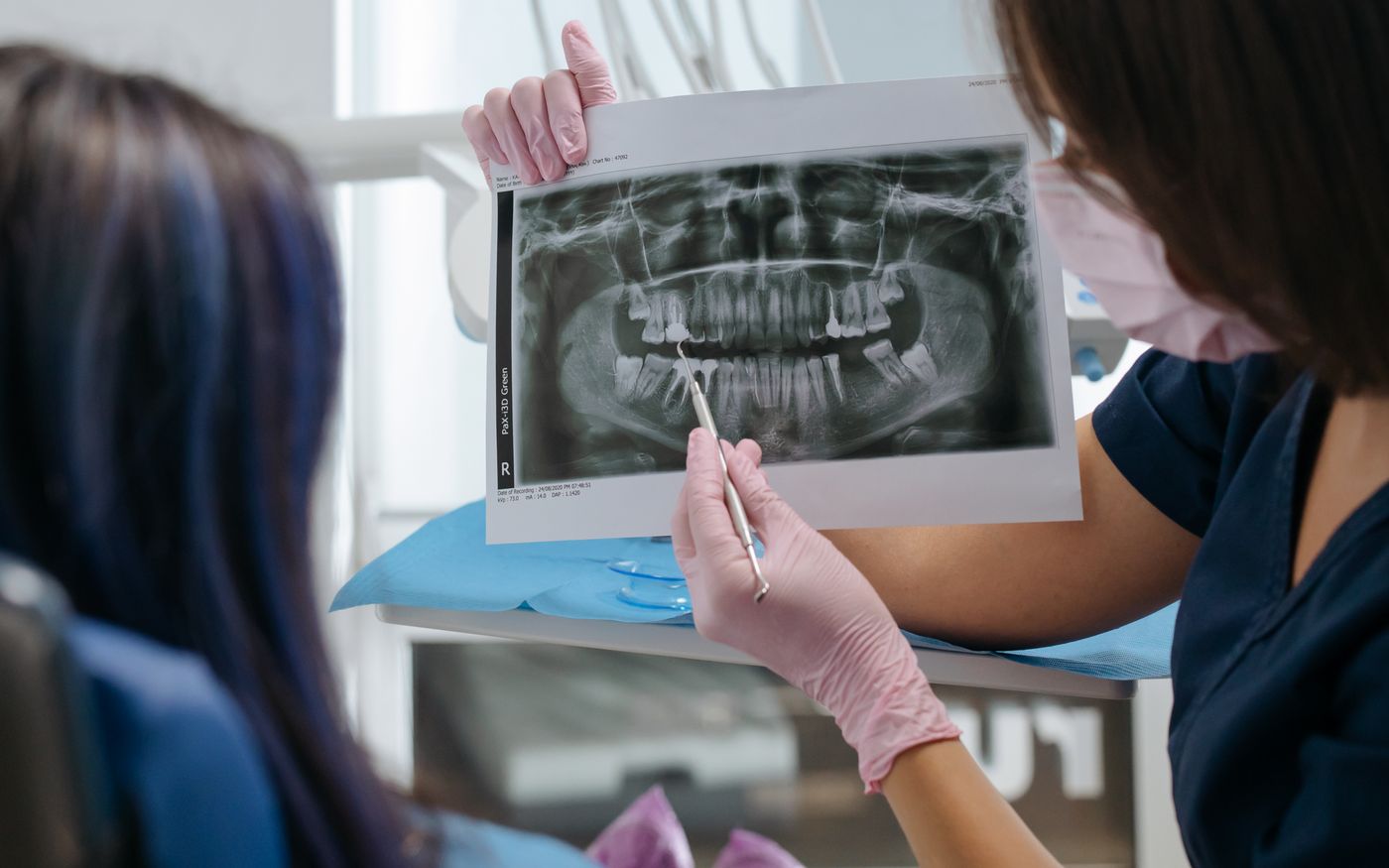
Quick answer: Dental X-rays during pregnancy are not taken routinely, but pregnancy does not automatically rule out imaging when a clear clinical question exists. Tell the dental practice that you are pregnant, bring previous images and ask what decision the X-ray will support. Pain, swelling or injury should not be postponed until after birth without personal dental advice.
Reviewed by Dr. Kant Oektem. Last updated: August 2026.
Key points
- Tell the dental practice about an existing or possible pregnancy before imaging.
- A dental X-ray should answer a specific diagnostic or treatment-planning question.
- Previous X-rays can help avoid unnecessary repeat imaging.
- Pain, swelling or dental injury may require timely assessment during pregnancy.
- The dentist explains indication, technique, protection and alternatives for the individual case.
When a dental X-ray may be useful
Dental X-rays can show information that is not visible during an examination in the mouth. Depending on the symptoms, imaging may help assess decay between teeth, inflammation near a root, bone levels, a dental injury or treatment planning questions.
Before imaging, the practice should define the clinical question and how the result will guide care. A fixed calendar is not a useful reason for an X-ray, but fear of pregnancy should not lead patients to delay necessary assessment without advice.
- A defined clinical question comes before the image.
- Previous images and reports should be considered.
- The smallest suitable examination should answer the question.
- Three-dimensional imaging needs a separate clinical reason.
How radiation exposure is limited
Dental imaging is planned around a justified clinical need and performed with settings that limit exposure. Correct positioning, suitable equipment and a field limited to the diagnostic task are part of responsible radiography.
Protective measures and legal requirements can depend on the imaging method and current professional guidance. The dental team therefore uses the examination, equipment, clinical question and applicable rules rather than relying on a general online promise.
What to tell the dentist before imaging
Tell the practice if you are pregnant or might be pregnant. Also mention current symptoms, previous treatment, relevant medical conditions and any existing dental images. This information helps the team judge urgency and choose an appropriate diagnostic approach.
Bring previous images, reports or treatment plans when you have them. The dentist can then decide whether those records answer the current question or whether new imaging is clinically useful.
- Mention pregnancy or a possible pregnancy before imaging.
- Bring previous X-rays, reports and treatment plans.
- Describe pain, swelling, fever or an injury clearly.
- Ask about the purpose, alternatives and effect on treatment planning.
If pain or swelling develops
Toothache, increasing swelling, fever, a bad taste, a loose tooth or an injury should be assessed by a dental professional in a timely way. Pregnancy does not automatically mean that symptoms should simply be watched; urgency depends on the findings and general health.
Rapidly increasing swelling of the face or mouth, difficulty breathing or swallowing, severe illness or a serious injury require immediate medical help. An X-ray is only one part of assessment and cannot replace a personal examination.
Related guides from the practice
You may also find our guides to dental X-rays, local anaesthetic, bleeding gums and periodontitis, dental abscess, dental FAQs and contacting the practice useful. These pages support preparation but do not replace an examination.
FAQ
Can I have a dental X-ray during pregnancy?
A dental X-ray during pregnancy should be planned only when there is a clear clinical reason. If imaging is important for diagnosis or treatment, the dentist considers the examination, technique and current safety requirements. Do not postpone necessary assessment on your own.
Should I tell the dentist that I am pregnant?
Yes. Tell the dental practice about an existing or possible pregnancy before imaging. This helps the team review the clinical question, urgency, imaging method and alternatives. Bring previous X-rays and reports as well, because they may answer part of the current question.
Can I delay a necessary X-ray until after birth?
That depends on your symptoms and the clinical question. A non-urgent check may sometimes be planned later, but pain, swelling, injury or suspected infection can require timely assessment. Ask the dental practice to explain the benefit of imaging and the consequences of waiting.
Do I need a lead apron for dental X-rays?
The required protective measures depend on the equipment, examination, local rules and current professional guidance. The dental team decides this at the appointment. Justification, correct positioning, suitable settings and limiting the image to the clinical question remain important parts of safe practice.
What should I do about tooth pain during pregnancy?
Call the dental practice and describe pain, swelling, fever, bad taste, injury and the stage of pregnancy. Rapid swelling, difficulty breathing or swallowing, severe illness or serious injury require immediate medical help. Home remedies do not replace a dental examination.
Medical context and sources
These references support patient orientation and do not replace diagnosis, examination or individual treatment planning.
- American Dental Association: Pregnancy
- American College of Obstetricians and Gynecologists: Oral Health Care During Pregnancy
- Guy’s and St Thomas’ NHS Foundation Trust: Dental X-rays
- NHS: X-ray
- NHS: Gum disease
- American Dental Association MouthHealthy: Pregnancy dental concerns
- Charité: Dental treatment during pregnancy (German patient guidance)