
Several Missing Teeth: Bridge, Implants or Denture
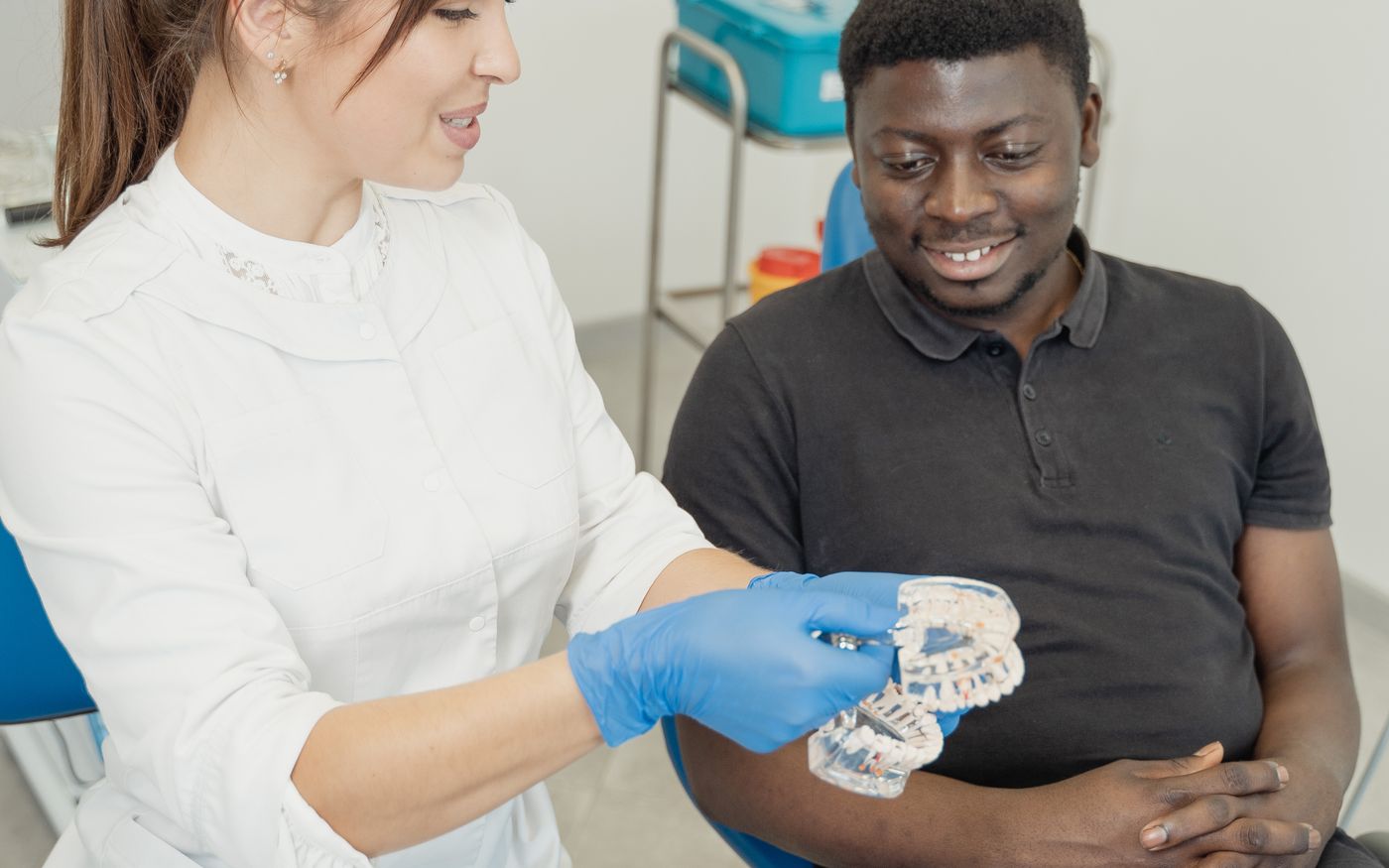
Quick answer: For several missing teeth, a bridge, implant-supported restoration or removable partial denture may be considered. A bridge relies on suitable supporting teeth, implants require surgical and restorative planning, and a partial denture can be useful for larger or distributed gaps. Examination of the gaps, gums, bone, bite, cleaning and goals determines which option is reasonable.
Reviewed by Dr. Kant Oektem. Last updated: September 2026.
Key points
- The number, distribution and length of the gaps shape the treatment question.
- A bridge depends on suitable, stable supporting teeth and a plan that can be cleaned.
- Implants can support individual crowns, bridges or removable restorations but require individual surgical and restorative planning.
- A removable partial denture may be considered for larger or distributed gaps.
- Findings, cleaning access, health, priorities and long-term reviews belong in the same decision.
The examination comes before the option
Several missing teeth do not always create the same treatment situation. The dentist considers the location and length of each gap, whether the spaces are next to each other, which teeth remain and how previous restorations affect support. Bite, jaw function, gums and the condition of the remaining teeth also matter.
An examination separates teeth that can be maintained from suitable supporting teeth and areas needing treatment first. X-rays or other imaging may be useful for the clinical question. An online guide cannot show the actual bone, roots or gum condition.
- Record the gap pattern, length and position of the missing teeth.
- Assess supporting teeth, roots, gums and existing restorations.
- Review bite, loading and realistic cleaning access.
- Agree on the treatment goal before comparing options.
A bridge needs suitable supporting teeth
A bridge replaces one or more missing teeth by attaching the replacement to suitable neighbouring teeth or other supports. With a conventional bridge, the supporting teeth are prepared to receive the restoration. Their roots, gum support, span, bite and expected load must be assessed together.
Several adjacent gaps may be considered for a bridge, but a longer span or weak support can change the plan. A bridge supported by teeth that already need large restorations is different from one relying on sound, untouched teeth. Cleaning beneath the replacement teeth must be planned from the start.
- Assess the stability and outlook of the supporting teeth.
- Review span, biting forces and the design of the bridge.
- Explain preparation and possible effects on the supporting teeth.
- Plan cleaning beneath the bridge and around its supports.
Implants can support fixed or removable teeth
A dental implant is an artificial tooth root placed in the jawbone. It can support an individual crown, an implant-supported bridge or a removable denture. Several missing teeth do not automatically require one implant for every gap. Number and position depend on the gaps, bone, bite and planned restoration.
Treatment has a surgical and a restorative phase. Bone volume, gum health, oral hygiene, general health, smoking, medicines and the ability to attend reviews affect suitability. If implants are not suitable or not wanted, a bridge or partial denture should be discussed as an alternative plan.
- Assess bone volume and nearby anatomical structures before implant planning.
- Treat active decay, gum disease or infection before definitive treatment.
- Include surgery, healing, risks and review appointments in the plan.
- Compare implant-supported bridges with removable implant-supported options.
A partial denture can suit larger or distributed gaps
A removable partial denture can replace several missing teeth and gain support from the teeth that remain. It may be considered when the number, distribution or stability of the supporting teeth does not allow a suitable fixed bridge. The design and retention elements are planned for the individual mouth.
A partial denture is not simply a fallback. It can provide a flexible way to replace several teeth, but it must be removed, cleaned and inserted safely every day. Remaining teeth, gums and oral tissues need ongoing care. Soreness or a loose fit should lead to a review.
- Describe the number and distribution of missing teeth.
- Discuss support, retention, speech, function and daily handling.
- Practise safe removal, cleaning and insertion.
- Arrange early review for sore spots or movement.
Bone, gums and supporting teeth change the plan
Gums and supporting tissues should be stable enough for the planned load. Decay, leaking restorations, infection, root problems or mobile supporting teeth can change the order of care. For a bridge, suitable abutments are central. For implants, the clinician also assesses the height and volume of bone at the planned sites.
Bone augmentation is not automatically required. It is considered only when the planned implant position does not have enough suitable bone. The need depends on anatomy, the restoration and a risk assessment. If one option cannot be used, another design or a focused referral may be appropriate.
- Treat active gum inflammation and decay before definitive replacement.
- Assess bone only in relation to the proposed implant position.
- Document preparatory treatment and its sequence.
- Keep alternative designs available if the first option is not possible.
Care and follow-up belong in the comparison
Every replacement needs daily care and regular dental reviews. A bridge needs cleaning beneath its replacement teeth and around its supports. Implants need careful cleaning around the implant and restoration. A partial denture is cleaned outside the mouth, while the remaining teeth, gums and oral tissues continue to need attention.
The suitable option must be one that can be maintained in daily life. Cleaning aids, manual dexterity, vision, dry mouth and willingness to attend reviews should be discussed before treatment. Pain, bleeding, pressure areas or a loose appliance are reasons to arrange an assessment.
- Check cleaning access for each proposed design.
- Choose appropriate brushes and interdental aids.
- Plan maintenance visits from the beginning.
- Do not use household glue or attempt an appliance repair.
Appointments, temporary options and cost planning
There is no universal number of appointments. The process may include examination, imaging, preparation, planning, impressions or a scan, laboratory work, fitting and review. Implant treatment adds the surgical phase and healing, so the time course may extend over a longer period.
Before treatment starts, the plan should explain the restoration, alternatives, preparation, aftercare and individual costs. Patients in Germany should review a treatment and cost plan and reimbursement questions with the dental practice and insurer. An online price cannot replace patient-specific documents.
- List all phases and any temporary replacement.
- Ask what may happen if treatment is delayed.
- Review the treatment and cost plan before starting.
- Ask the insurer about reimbursement and private portions.
Questions to take to the consultation
Bring available X-rays, reports, a medication list and previous treatment plans. Ask which teeth can be maintained, why one option is recommended and how the alternatives differ in cleaning, appointments, risks and long-term reviews.
- Which findings decide between a bridge, implant and partial denture?
- Which teeth are suitable supports and why?
- Would bone augmentation be needed for the proposed implant sites?
- How would daily care and follow-up differ?
- What temporary option and records would be useful?
Related guides from the practice
You may also find our guides to crowns, bridges and implants, implant planning, denture care, dental second opinions, root canal or tooth extraction, dental treatments and contacting the practice useful. These guides support preparation but do not replace an examination.
When a missing-tooth problem needs prompt review
A gap without acute symptoms is usually a planned decision, but it should still be assessed rather than managed from a description alone. Pain, swelling, pus, fever, bleeding, injury or a suddenly loose tooth can indicate an acute problem and needs timely dental assessment.
Rapidly increasing swelling in the mouth, face or neck, or difficulty breathing or swallowing, requires immediate medical help. Long-term tooth replacement should be planned after the acute cause has been assessed.
FAQ
Which option may fit several missing teeth?
That depends on the number and distribution of gaps, the condition of supporting teeth, gum health, available bone, bite, cleaning access, general health and your priorities. A bridge, implant-supported restoration or removable partial denture may each be reasonable in different situations. A personal examination is needed.
Can a bridge replace several missing teeth?
A bridge can replace several adjacent teeth when the span and supporting teeth are suitable. The dentist assesses the abutments, roots, gums, bite, cleaning access and load. If support is weak or the gap is too long for the planned design, another fixed or removable option must be discussed.
Do I need one implant for every missing tooth?
No. Implants may support individual crowns, an implant-supported bridge or a removable denture. The number and position depend on the gap pattern, bone, bite, planned restoration and cleaning. Implant treatment also involves surgical risks, healing and long-term reviews, so suitability must be assessed individually.
Is bone augmentation always needed for implants?
No. Bone augmentation is considered only when the planned implant position does not have enough suitable bone. The need depends on anatomy and the proposed restoration. If implants are unsuitable or not wanted, a bridge, partial denture or another treatment plan may be discussed instead.
How do I clean a bridge, implants or denture?
All options need daily care and regular dental reviews. Clean beneath a bridge and around implant components with the recommended aids. Remove and clean a partial denture outside the mouth as instructed, and continue caring for remaining teeth, gums and oral tissues. Soreness or looseness needs review.
Medical context and sources
These references support patient orientation and do not replace diagnosis, examination or individual treatment planning.
- NHS: Dental treatments
- NHS: Dentures
- Cambridge University Hospitals NHS: Dental implants in restorative dentistry
- Leeds Teaching Hospitals NHS: Dental implants
- KZBV: Zahnersatz
- Verbraucherzentrale: Comparing bridges, implants and dentures
- American Dental Association: Denture care and maintenance
- National Institute of Dental and Craniofacial Research: Dental materials